I’ve talked a lot about targeting, re-targeting, and creating lookalike audiences to increase your ROI on digital ad spend. These are all valuable skills and tricks, but for some products you’ll need to do more. Creating one, well-targeted, well-written, fully-optimized ad just isn’t always enough any more. You need to nurture your leads through a series of ads, that will educate, interest, delight, and convert the lead.
Campaign Objectives
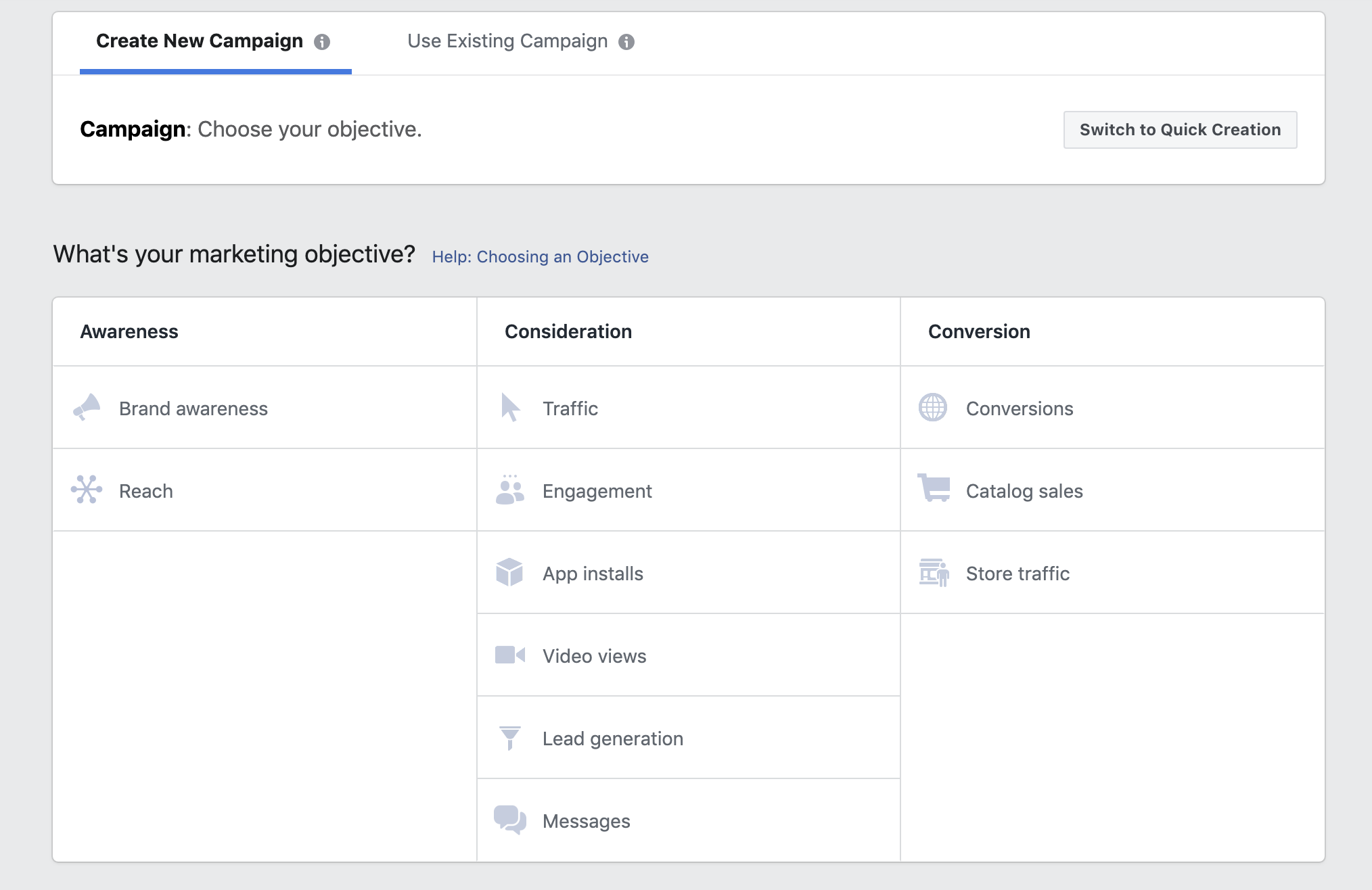
Facebook offers a variety of campaign objectives when you are first laying out your ad campaign. They lay out these objectives in something of a sideways funnel. The objectives at the left are useful for bringing people into your funnel, and educating them about your offerings. As you move further to the right, you are dealing with closing leads and making conversions.
Some products will require ads that touch on all of these points, in order to shepherd your prospect through their buyers journey. For high-ticket, or highly-complex products, you’ll need to establish the value of your product, identify the pain-point that you can fix, and then deliver an irresistible offer to your prospect. Moreover, you may need to create multiple ads for each of these objectives, in order to hit the different aspects of your target audiences most effectively.
Awareness
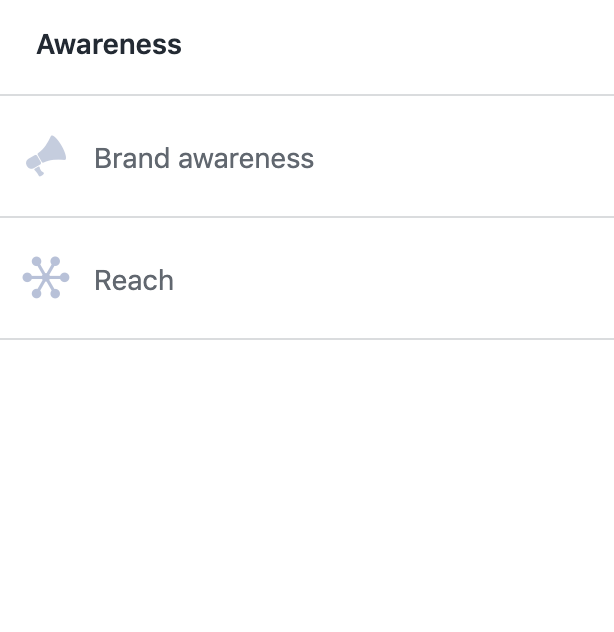
Start your multi-part campaign by raising awareness for your product, among individuals who show interest in your field of service. The options for targeting are nearly endless. While raising awareness, you’ll want to focus on individuals that share commonalities with your customers, website visitors, or ideal customer persona. Consider using custom audiences, and lookalike audiences to build up a following of “aware” consumers.
Consider creating an awareness campaign that includes a variety of ad sets. This way, you can target different groups to see which demographics and audiences are producing the best results. You can even optimize your ad spend across the ad sets, so that your best performing ads will be emphasized without any work on your end.
Consideration
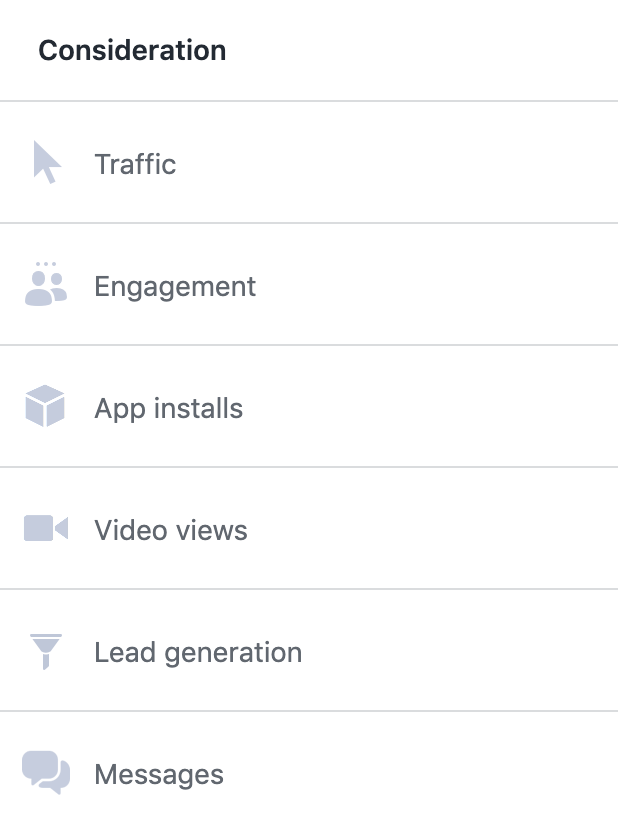
The consideration stage is where you start to bring in leads, and put together lists of folks that you can remarket to. The goal in this stage is to bring traffic to your site or offer, get leads by having people fill out a form—generally, just getting people to engage with your content. Once someone has engaged with your content on Facebook, you can target them with future ads, further down the funnel.
Depending on your product or niche, the consideration stage could appear in a lot of different ways. It could focus on educational material that’s meaningful to a potential prospect; it could be product demonstrations, with suggestions for uses; it could be a content offer that gives valuable information to your prospects in exchange for an email address; it could be a form that prospects fill out to RSVP for an event. Anything that gets your wider audience to narrow itself down, and show you that they are considering your brand or product.
Conversion
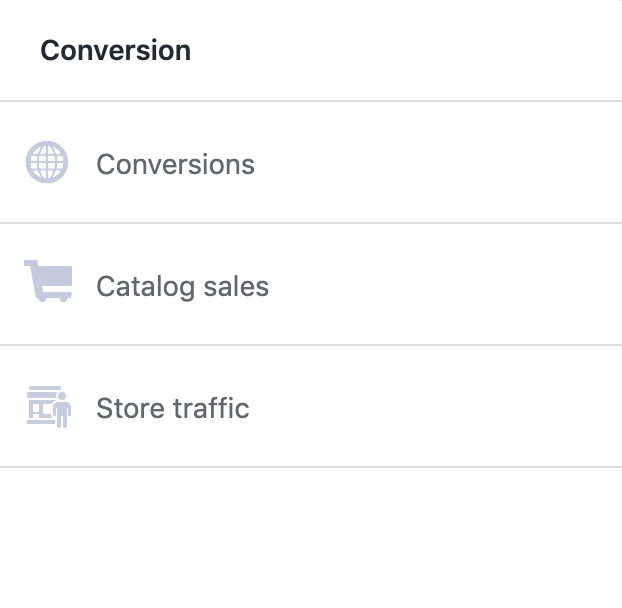
Finally, you have conversion objectives. Conversions are where the money is. Ultimately, most marketing initiatives are aimed at getting conversions. Conversions can be any number of events—the most direct conversion is from a lead to a customer; when a prospect actually purchases a product online. You can also optimize your ads for different conversions though. If the goal of your marketing initiative is to book meetings with your sales people, then your conversion point would be scheduling a phone call through your online portal.
Conversion ads are generally the most difficult to actually convert. They are asking the most of the prospect. For that reason, you generally want to be more targeted with your conversion ads. Using custom audiences can help you target consumers that are most likely to convert on your ads. People who have already engaged with your page or website—even returning customers—are great custom audiences to target for conversion ads. You could also experiment with targeting fans of related pages, or folks who are local to your business if you are a brick-and-mortar store.
Tips and Tricks
Diving into the all of the variables and possibilities of each type of ad could take a lifetime. The takeaway though, is to start with a broad audience and narrow it from there. Use the information that your awareness campaigns can generate, to optimize your consideration and conversion campaigns.
Facebook offers a plethora of tools that help you to maximize your ROI by leveraging huge amounts of data and automation. Utilize these tools and shortcuts to optimize your budgets and ads with less leg-work and research on your part!
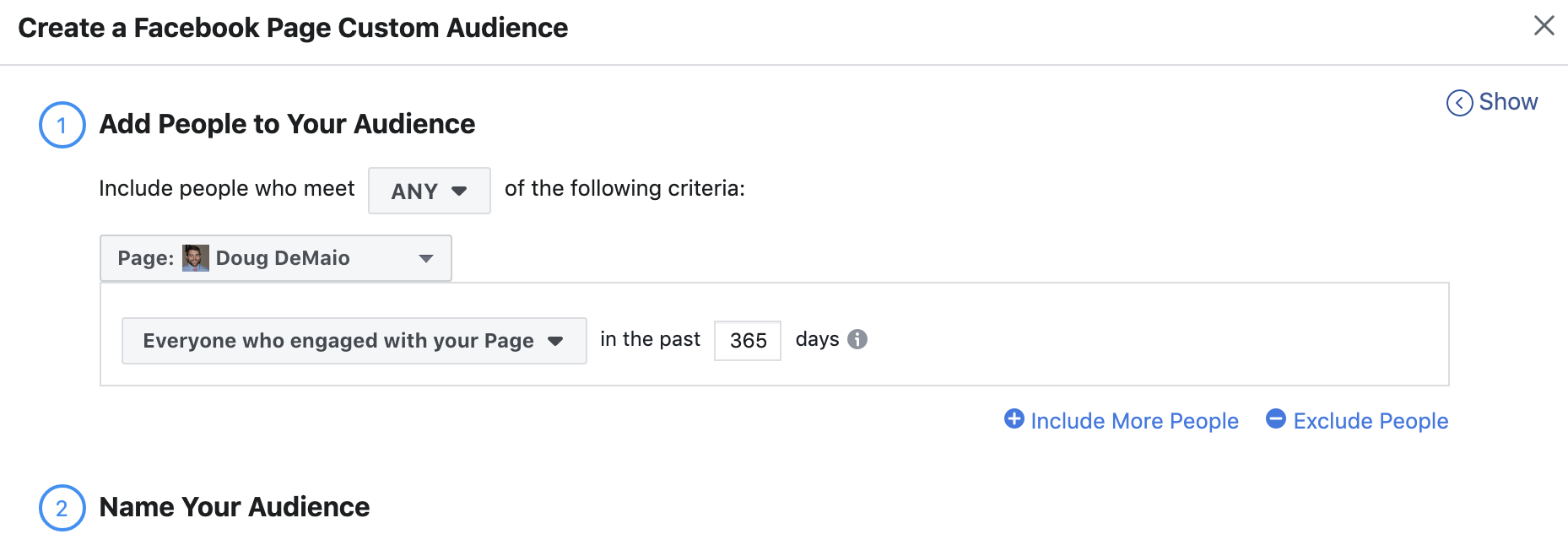
One such trick is to create audiences of people who have engaged with your Facebook page in the past. People who have engaged in the past are much more likely than average to engage in the future!
Multiple Ads
Running multiple campaigns that target each stage of the buyers journey is going to help build your brand and bottom line. Equally important, though, is running multiple ads within each stage of the journey. Create multiple ad sets, and multiple ads for each stage, and optimize your budgets across the ad sets to deliver the best ads. You can do this at every stage of the journey, to be sure that you are targeting diverse audiences.
Budgeting and Targeting
Using the Facebook Pixel allows you to track and target folks who have visited or made specific actions on your website. If you already have an active web presence, you can use these “warm” audiences to target consideration and conversion ads, without spending on awareness ads. Awareness ads serve the purpose of getting your name in front of people, and getting people to interact with your page. If you already have a group of people you can market to, further down the funnel, then go after them! They are the low-hanging fruit that will cost less to acquire as customers.
Conclusion
Nurturing leads with multi-part ad campaigns is useful for a number of reasons. First of all, it guides your prospects through a buyers journey of your own design—ultimately leading to the desired buyer behavior. Secondly, it allows you to connect with prospective buyers are every stage—giving you the chance to position your brand as the one to beat. Third, it allows you to create a number of different ads for each stage of the journey. This helps with targeting diverse prospects who all make up your target audience. Not all of your prospects will react to the same types of ads—even if they are at the same stage of the journey. Create multiple ad sets and ads to explore the best options for your niche.
Get in touch today to discuss what’s possible with Facebook advertising.

 DeMaio Digital Marketing
3 thoughts on “Nurture Leads with Multi-Part Campaigns”