You may have heard reference to the Google Maps Three Pack, or Maps Pack. What is the “three pack” though; how is it determined; and how powerful is it, really?
Let’s take a look.
What is the Google Maps Pack (by any name…)
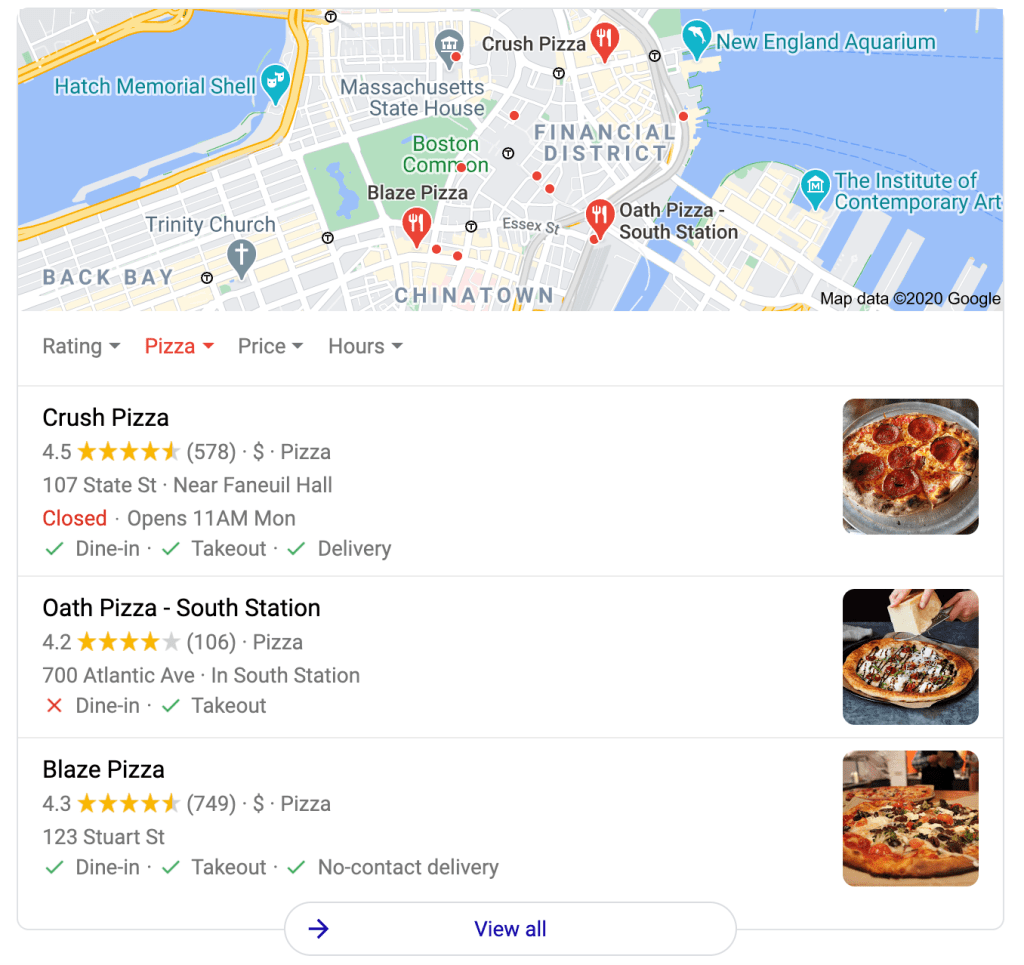
The Google Maps Three Pack, (also known as the “maps pack”, the “featured maps listings,” and a number of other names) refers to the window that appears at the top of Google search results, showing you local businesses related to your search, and their locations on Google Maps.
You’ve undoubtedly seen and interacted with a maps pack at some point in your searching.
But how important is being in the maps pack, for being seen on Google?
How Important is Being in the Google Maps Pack
The maps pack commands a lot of real estate on the Google search results page, especially in mobile formats. On searches that display a maps pack, the results therein command a massive amount of attention from searchers.
Searches for local and service-area based businesses result in a maps pack being shown nearly every time.

Take a look at these stats from Google Maps…
- Well over 90% of Google searches for service area businesses show a Google maps pack as the first organic result
- 44% of searchers make their first click in the maps pack
- If you aren’t showing up in the 3 pack of maps for your area, you’re missing out on AT LEAST 39.6% of potential traffic
- On average, moving up 1 spot in the search results will increase click throughs by 30.8%
In short, if you want people to know where your business is, or what area you serve, you need to be in the maps pack.
Local Businesses are the Most Impacted
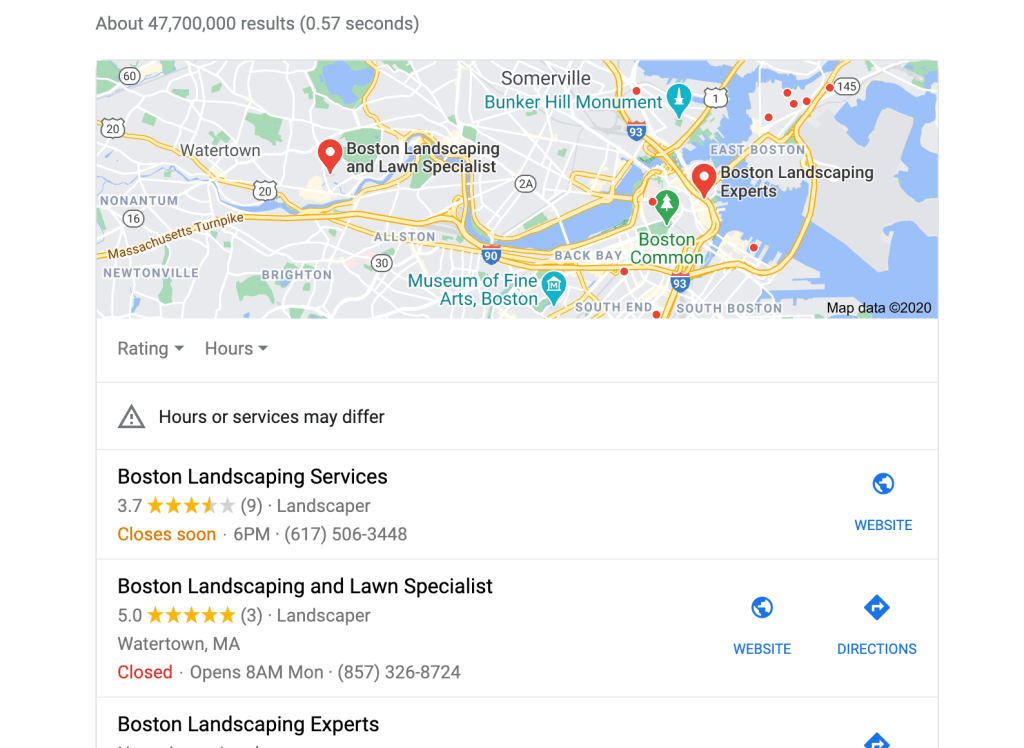
This applies to so many different types of businesses—in-person services like health and beauty, dental, retail shopping; service-area businesses like landscaping, plumbing, trucking.
This is especially important for businesses where people are looking to make a decision quickly—like where to get dinner, or who to call to unlock a car in an emergency.
It’s clear that being in the Maps Pack when people search for your service or product is important, and will drive a lot of traffic to your site. But how do you get there?
How does Google determine which businesses show up in the maps pack, and which don’t?
How to get into the Google Maps Pack
To understand how to get into the maps pack, we have to look at how Google interacts with, and ranks websites. Google employs what’s called a “blended algorithm” to determine what shows up in their Google Maps Pack.
Google’s Blended Algorithm
So, what exactly is a blended algorithm? A blend of what?
For a while, (back in the day) what showed up in the Maps Pack was the same exact stuff that showed up in the top results on the Google search page. The top three search results were the top three maps results, with no exceptions. Google rewarded on-page SEO, with both position ranking and maps ranking.

(You’ve probably noticed that this isn’t always the case anymore.)
Then for a while, this changed completely. Maps Pack listings stopped going to the top organic pages, and started going to the pages with the most citations across the web. Whoever was listed in more places, with their brand and address, would show up in the Maps Pack. You can probably see the potential pitfalls of that strategy (and the sketchy ways you could optimize for it).
This didn’t provide the best experience for Google customers. Essentially, the websites showing up in the maps pack were not the best options for those searches. Customers still wanted to find highly relevant, popular businesses in the Maps Pack; so Google needed to find a new way to deliver.
Enter: The Blended Algorithm
To better serve their customers (searchers), Google decided to blend these algorithms together, so that organic search rankings would factor into the Maps Pack rankings again, as well.
Around this same time, though, Google started to implement new ranking factors for both search and maps. Especially maps.
Google My Business Alignment
The name of the game now, is alignment. Making sure that your strategy, your keywords, your content, and your GMB structure, are all aligned, consistent, and supporting each other.
On page SEO and citations across the web are still important factors for ranking—but they need to be aligned with your listing in Google My Business.
Aligning Citations
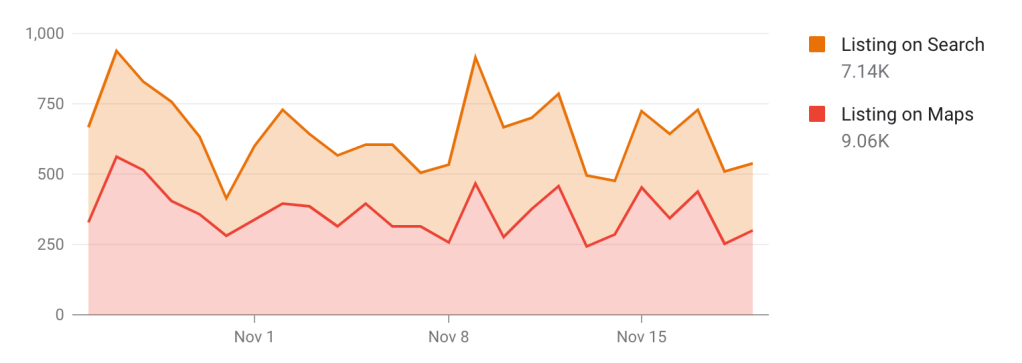
Striving for citations is always a good strategy when building out a site—getting listed on relevant sites, especially with backlinks to your site, is a powerful signal to Google that you are a legitimate business. To maximize the effect on maps listings, make sure that your business name, phone number, email address, and URL information is formatted the same among all of these citations, and that it directly aligns with what is listed in Google My Business.
Aligning Site Content
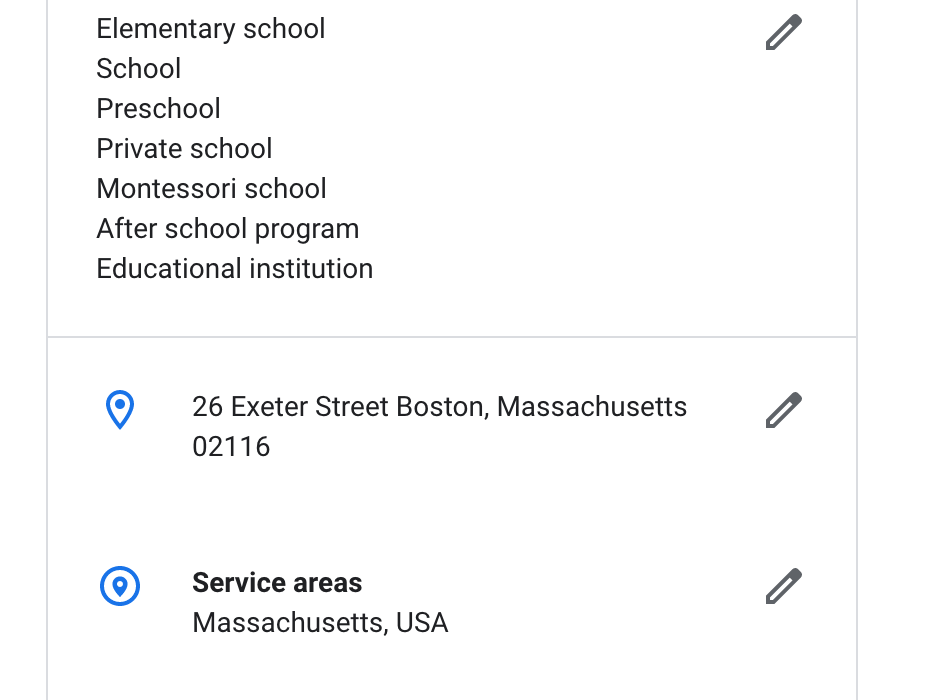
You also want to align the content on your site to support what is included in your Google My Business account. Using the same terminology that Google uses in their category select dropdown menus when you are building out relevant pages on your site will signal to Google that those pages are better suited for the maps pack than other pages with similar content (on your competitors’ sites).
Remember the SEO Basics
When building out these pages though, you can’t forget the hallmarks of on-page and off-page SEO that will boost those pages to the top of the front page of Google. Don’t forget to utilize all of the metadata and site structure that leads to a solid SEO strategy. Check out this post for more on site structure, and this post for more on on-page SEO.
Conclusion
There is no quick-and-easy way to rank in the maps pack for competitive keywords and locations. It depends on building out a network of citations across the web; creating a solid base of SEO and content structure to support your site; and keeping a clean, well-aligned Google My Business page to back everything up.
For competitive niches, creating the content environment that will rank your site high on the first page of Google is the first step towards owning the maps pack. Silo your content; use relevant headers and metadata; align your content with the data in Google My Business; create more and more content to support your feature pages, and link from them to the relevant feature page.
It will take some time and some effort to plan out the content you need, and to create it all. But once you start ranking on both the first page of Google, and the Maps Pack, the rewards will be worth it.

 DeMaio Digital Marketing