Every digital marketer has a different skillset, and therefore a different toolkit. Some folks focus on creating podcasts, and have all the best audio equipment. Some folks really focus on linkbuilding, and use the best analysis and outreach software.
On the other hand, some people are more generalists. If you’re running a small marketing team, or you’re the one-person team supporting your business, you’ll need to be able to do a little bit of everything. And you’ll need a low-cost, highly effective toolkit to get that done.
Here are the pieces of hardware that compose my “go-bag” of digital marketing tools. With these pieces of equipment, I can plan, coordinate, record, and implement a multi-channel marketing campaign—including multi-media ads and organic content. Basically, my business in a box.
Digital Marketer Laptop
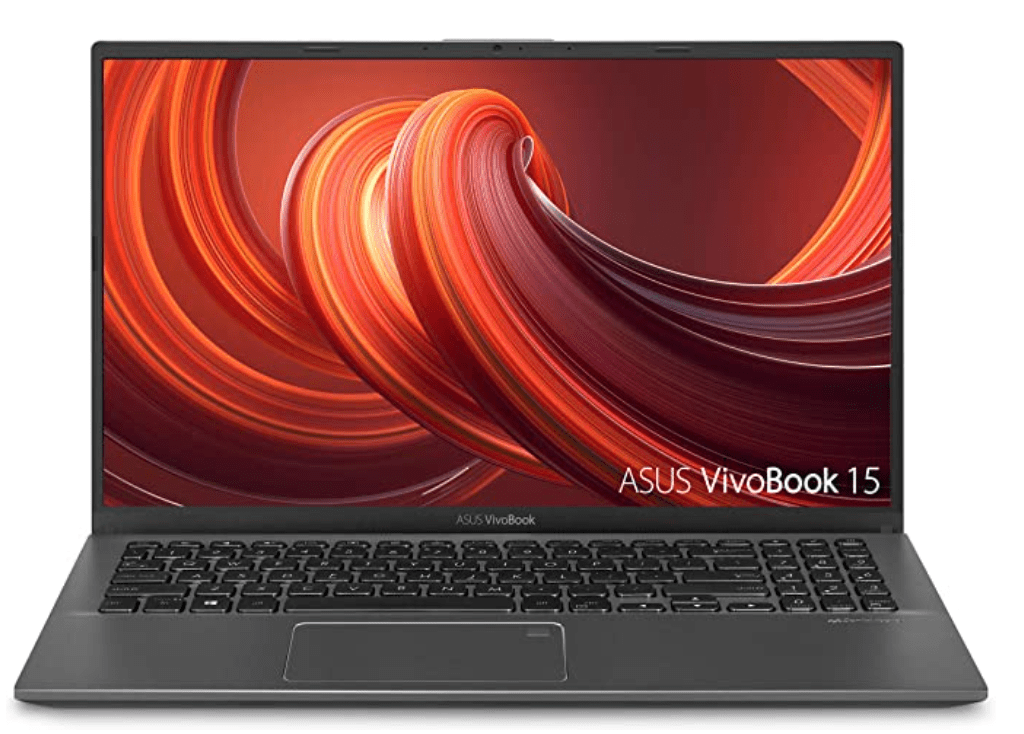
There are a lot of options on the market for a laptop powerful enough for my needs. Basically, you want something powerful enough to edit video without grinding everything else to a complete halt. Generally, that’s going to be the most taxing thing you’ll need the machine to accomplish.
Asus Vivobook 15
I get along fine with an aging MacBook, but they do tend to be pretty costly new. I would also recommend this Asus Vivobook 15 which packs quite the wallop of power and memory, a decent screen size/resolution, and won’t break the bank. This will be my next laptop, when needed.
With 8gb RAM, an AMD quad-core processor and AMD Radeon graphics card, you’ll be more than capable of editing images, video, and uploading hefty files to the cloud with no issues. New Asus laptops run Windows 10, and can run all of my favorite Adobe software.
For extensive video projects, you may want to grab an external hard drive. More on that below.
Video Camera
This is another category that you can research until the cows come home and still not be sure of what you need. There are just so many options. I’ve used a number of different cameras, from cell phone cams, to cheap handy cams, to high-end broadcasting equipment.
For the purposes of a digital marketer, you need something that can shoot in high definition, has a couple of XLR audio inputs, and has a bit of zoom capability. A dual memory card slot and a significant battery life are added bonuses.
Canon XA40 Professional
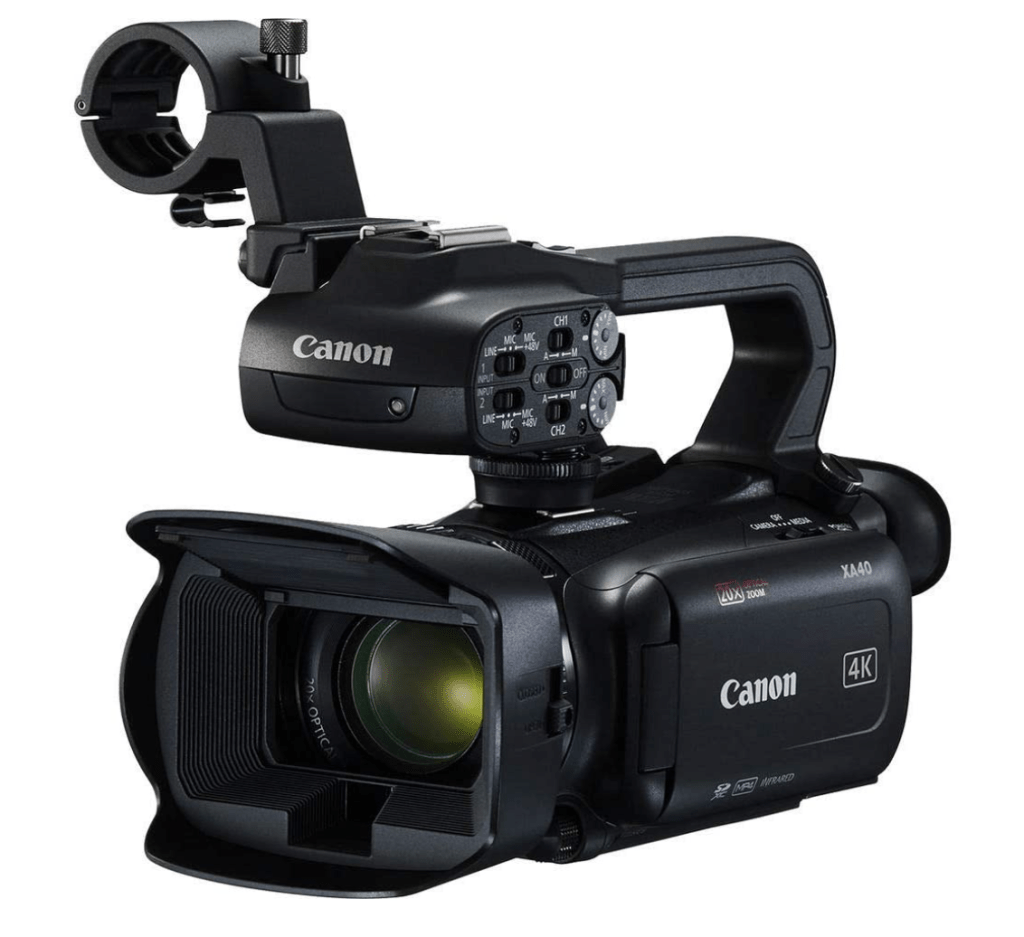
My favorite series of cameras for these purposes has been the Canon XA series. I started out using a Canon XA20 almost a decade ago, and since then they have updated and upgraded the same basic camera, releasing new iterations with improved hardware and software. The most recent iteration that I can vouch for is the XA40 Professional Camcorder.
It looks and feels almost exactly like the XA20, which makes it very user friendly for anyone who has used a “handycam” style camera before. That being said, it does not film like the XA20. Video and audio quality have grown with every iteration; the XA40 has wifi capabilities and remote control functionality; fantastic zoom functionality (20X optical zoom); and the resolution of the side screen is quite a bit improved.
You can buy the camera as a kit with many of the accessories you’ll need, but you rarely end up with everything you need (and some things you don’t need). I’ll outline the specific accessories that will work best, individually, and you can pick them up as they’re needed.
Plus—when you buy the kit, it usually comes with a bag made to fit that kit specifically, so you can’t add or swap out any components. Kinda lame.
Shop for the Canon XA40 Professional Camcorder here.
Camera Carrying Bag
There are a few accessories that you really need when it comes to owning a video camera. Some people might tell you otherwise, but I think the single most important accessory you absolutely need is a good carrying/protective bag. If you’ve ever been caught hustling through a rain storm with your camera on you, you know that having a good bag to tote it in makes a huge difference.
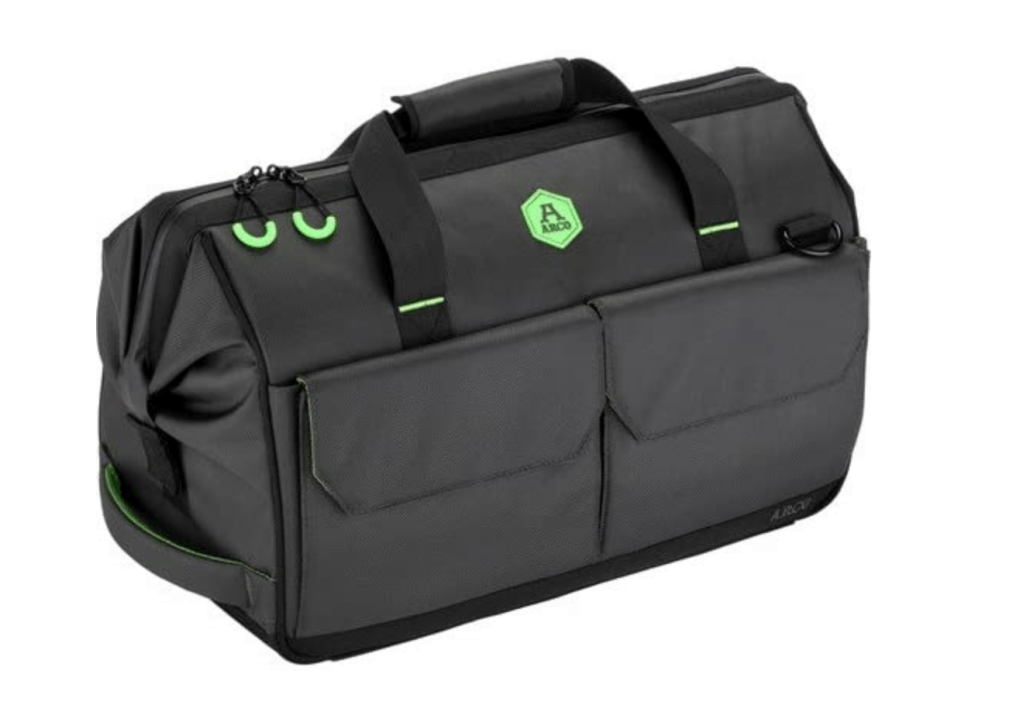
There are a few different types and styles of camera bags. I prefer to go with the more “generic” and modular style bags. You can often find bags built specifically for your camera, but they rarely leave space for you to store the rest of the gear you regularly carry when filming.
Arco Video Dr. CS-D20
My favorite bags so far have been the Arco Video Dr. bags. They come in a few different sizes, but the 20 (CS-D20) seems to fit the bill for the style of camera mentioned above, with just enough room for my most important components.
The bag features removable/movable padded dividers, so that you can customize the interior to any configuration you want without losing protection. It also features padded handles, a padded shoulder strap, and a weather resistant, protective outer shell. Once this bag is zipped up and velcroed down, your camera and gear will be snug and secure enough to survive a 4 foot drop, in the rain… I know from experience.
Plus, the accent color is pretty dope.
Grab your Arco Video Dr. CS-D20 here.
Microphones and Cables
Having the right microphones and sound cables is definitely number two on my most important camera accessories list. If you have bad audio, you may as well just have a still image. Nine times out of ten, if your audio is bad, your whole video is bad.
So, you have to have the right audio equipment for the job. But it doesn’t need to be crazy expensive or specific. You need a couple different kinds of mics, and you need to know how to use them effectively.
Mic cables
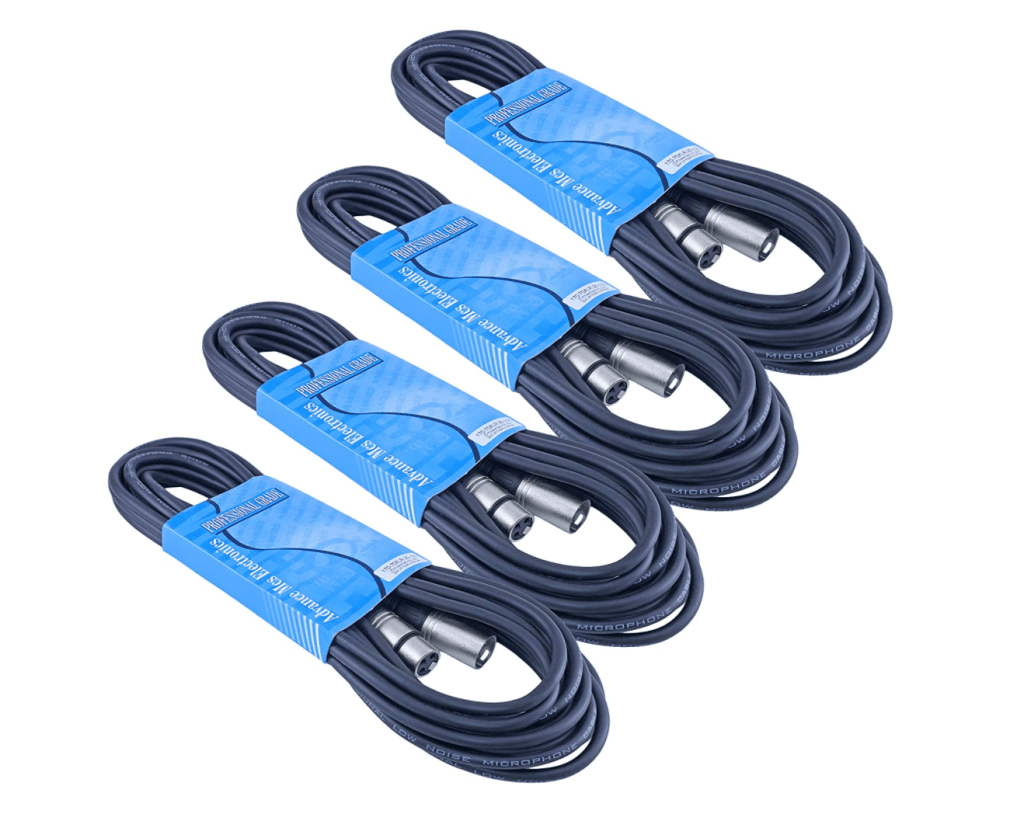
No matter what, you’re going to need some audio cables. XLR audio cables are what you’ll need, especially if you have a camera like the XA40. Generally, you’ll want one really short one (like less than a foot) and a couple of long ones (like at least 12 feet each). I generally carry a one foot cable, a 20 foot cable, and a 12 foot cable whenever I’m filming. Sometimes I bring different cables depending on the shoot.
The short XLR is for connecting a shotgun style mic to the camera. You don’t want a bunch of cable hanging off the camera getting in the way, getting caught, getting in the shot, etc. The longer cables are generally for a boom mic effect, or to connect a lapel mic. You can get do a whole lot of marketing filming with nothing but a shotgun mic and couple of lapel mics. You could make a living off of just that equipment, really.
Here’s the best deal I could find on XLR cables:
Grab yourself some cables to get started.
Shotgun Mic
A shotgun mic is designed to sit on top of your camera and capture sound coming from a small cone of space in front of the camera. Shotgun mics are great for grabbing footage on the go, and making sure your soundscape is generally following your visual scene.
A good shotgun mic is a necessity, even though the sound from this mic is not always the primary sound footage in your final video. Often, you’ll have sound from different sources being mixed to create your final track, but the shotgun mic will be what keeps your footage and the sound connected and aligned.
Marantz Professional Audio Scope SG-5B

For filming on the run, getting some quick ambient footage of an event, or generating b-roll that needs some ambient sound, a shotgun mic your go-to. Ideally, you’ll want a “powered” shotgun mic with XLR output. Fortunately, the XA40 (and other cameras) have a built-in shotgun mic holder, so you don’t have to worry about finding one with the proper mounting hardware.
Something like this Marantz Professional Audio Scope SG-5B will allow you to get high quality audio in a variety of situations, without spending too much on a microphone. A great multi-purpose tool, that you can remove from your camera and use in a pinch to interview subjects, or to act as a boom mic.
Grab the Marantz Professional Audio Scope SG-5B here.
Lapel Mic
A lapel mic, or a lavalier microphone, is a clip-on style mic normally used for interview-style scenarios where you want a discreet, easy-to-use microphone for your subject. The two biggest options when it comes to lav mics, is whether you want to go with a wireless or a wired microphone. Nowadays, there are countless wireless lav mic options, and many of them work very well.
I’ll point out the pros and cons of each, and give my recommendation for the best value of each type. I’ve used both, and they have distinct advantages depending on the situation.
Wireless Lav Mics
Wireless lav mics have obvious advantages. Once you clip the mic onto the speaker they don’t have to worry about stay in a certain place, or tripping over an errant mic cable. Also, they can be easier to keep hidden during a shoot.
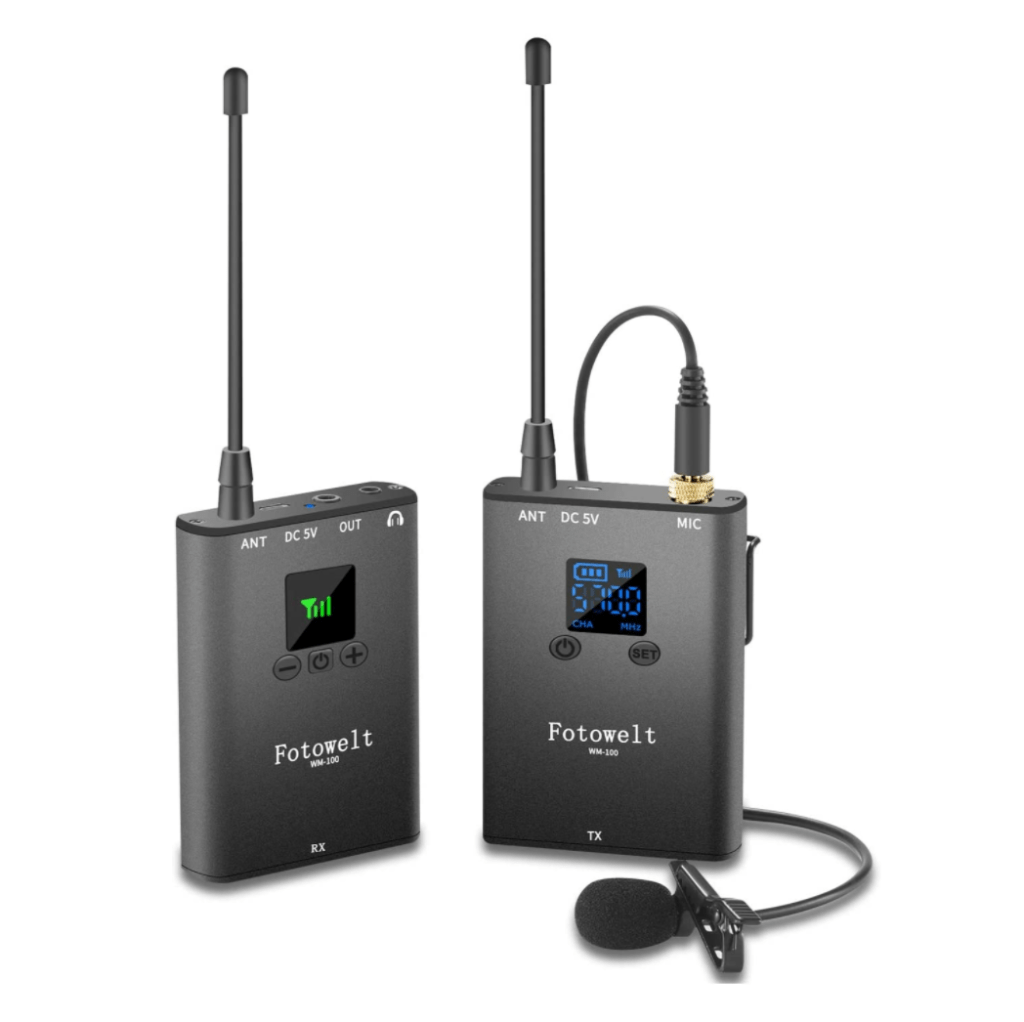
There are downsides to wireless mics, though. No matter the quality of the microphone, there is always a chance of interference when using a wireless audio channel. Losing out on a piece of audio content to interference, or because your subject wandered a bit too far from the camera, can really mess up your shoot. Also, wireless mics tend to cost a bit more than their wired counterparts.
Fotowelt WM1100 Wireless Lav Mic
When time and mobility are a factor, and you still want a high quality, low profile microphone to keep hidden, a wireless lav mic is your friend. Here’s the one that we use, which has a number of advantages. The XLR output on the receiver; the detachable foam filter; the quick and easy-to-use clip mechanism; and the relatively low cost make this Fotowelt WM1100 mic a great choice for your marketer toolkit.
Shop for the Fotowelt WM1100 wireless lapel mic here.
Wired Lav Mics
Wired lav mics are great to have in your bag of tricks. Whether connected to your camera or to an audio recorder, these are great for recording interviews, voiceovers on the fly, and in-person presentations.
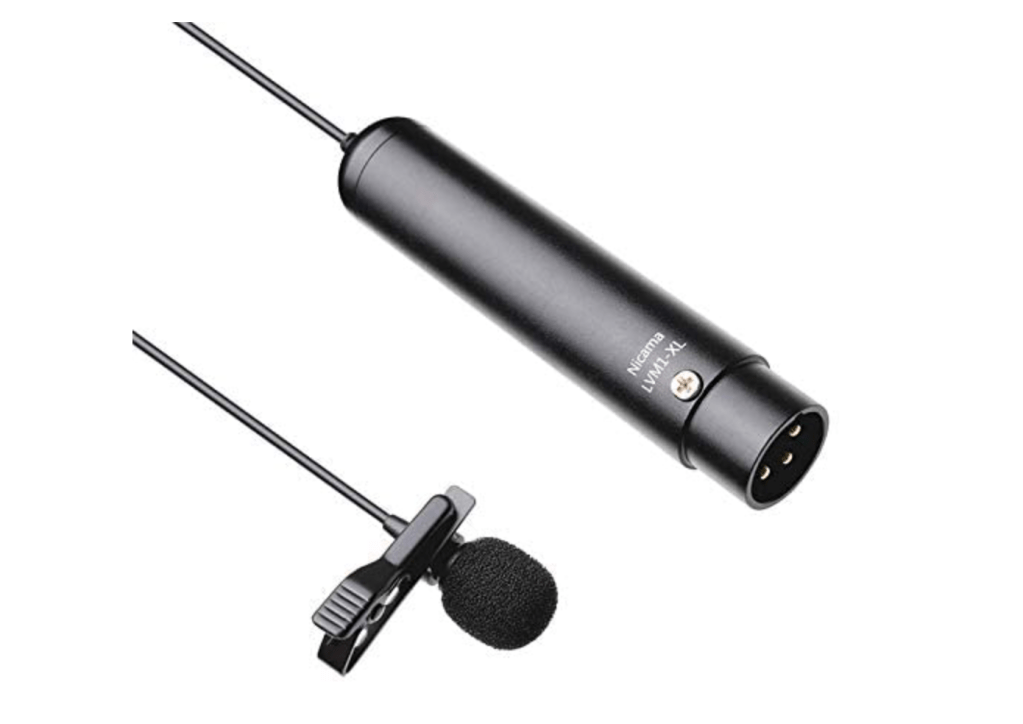
The benefits of the wired lapel mics is that you can get great quality audio with a discreet, easy to hide microphone. For natural looking interviews, testimonials, and presentations, you can attach a lav mic, hide a small cable under your subjects clothes, and get professional quality audio in a variety of settings. There are a number of low cost lav mic options that will serve you well for this purpose.
Nicama Phantom Power XLR Lav Mic
The obvious downside of the wired lav mic is the wire itself. Wired mics are best for when your subject is staying in one spot, so that they don’t end up tripping over a wire.
You’ll want a lav mic with an XLR output, and a high quality microphone head. This Nicama Phantom Power XLR Lav Mic is my favorite as far as cost vs quality. Works great—simple, easy to use—and low cost.
Grab yourself a Nicama XLR Wired Lapel Mic here.
Tripod
Once your audio and video recording needs are cared for, you’re going to need some support to get a steady shot. A basic tripod with the ability to pan and tilt will suit you well for most marketing needs: product shoots, interviews, establishing shots, etc.

As with all video equipment, there is a wide range in the price point, quality, and functionality of these products. I like using a tripod that I can trust to hold my camera securely; that moves with a smooth and steady action; and that has a few added features to help get a good shot.
Aa tripod with a good base, rubberized feet, and a solid metal construction will treat you best. You want something with firm, locking legs, and a little bit of weight to it, so you don’t have to worry about filming in a stiff breeze.
SLIK Pro 700DXQ AMT
This SLIK Pro 700DXQ AMT tripod checks all the boxes, and then some. With a variety of orientations, and a handy bubble level, you can use this tripod to film in a number of ways. Flipping the central support “upside down” and using the tripod to film directly downward is a great trick for getting impressive product shots, stop motion videos, timelapses and more. That functionality alone is worth the price of the product.
In short, this SLIK tripod is sick, and is underpriced for how useful it is.
Grab a SLIK Pro 700DXQ AMT Tripod from their shop here.
Audio Recorder
A fantastic tool to have in your kit—for recording interviews, podcasts, voiceovers, ambient sound, or a contingency audio track—a high-quality, handheld audio recorder will come in handy on the job more often than you think.
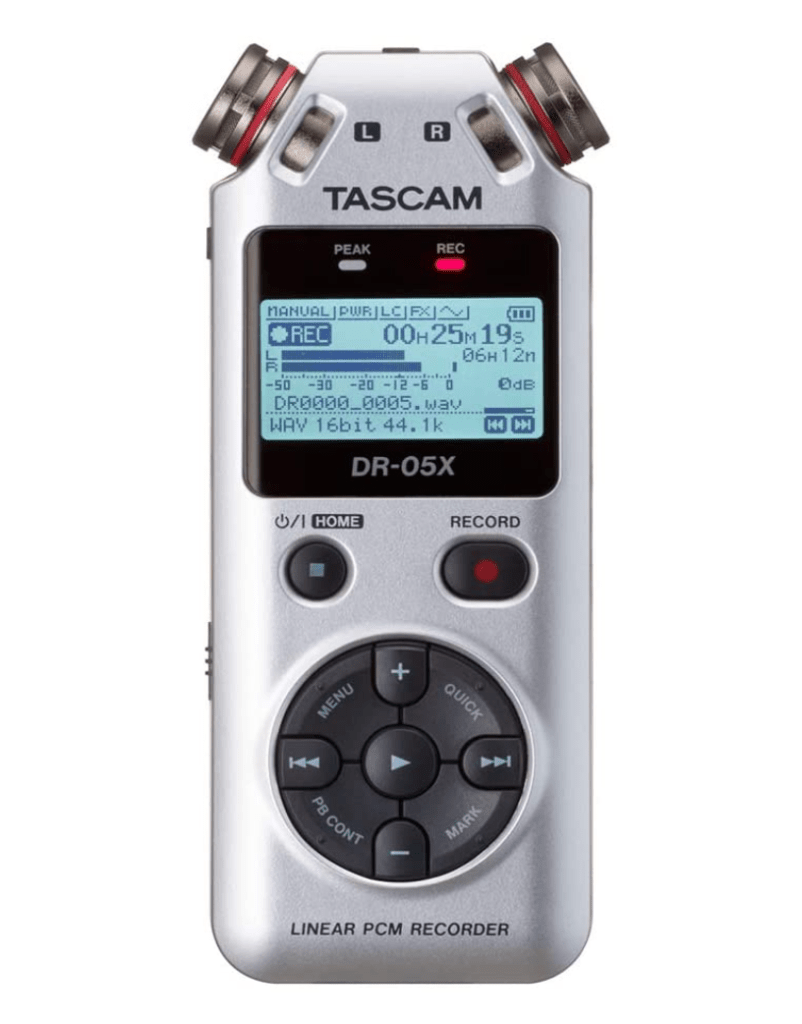
I originally bought a pretty cheap audio recorder, mostly to use as a back-up when recording interviews or voiceovers, but I quickly realized that having an extra audio source is crucial when putting together digital marketing campaigns. So, I upgraded to a TASCAM handheld recorder. It is a powerhouse.
TASCAM DR05X Stereo Handheld Digital Recorder
The TASCAM DR-05X Stereo Handheld Digital Recorder is the best bang for your buck when it comes to digital recorders. The two microphones are very high quality for their size, and the stereo recording function allows for a full, vibrant soundscape. This is one of the only professional-quality handheld audio recorders that you can find for under $100. Plus, it comes in silver (classic) and red (ooh la-la).
Shop for the TASCAM DR-05X Stereo Handheld Digital Recorder here!
Desktop Mic
Your computer probably has a built-in microphone, but having a high-quality desktop mic allows for you to do a number of other money-making types of recordings. A desktop mic is perfect for recording webinars, webcasts, onboarding calls, and videoconferenced-interviews.
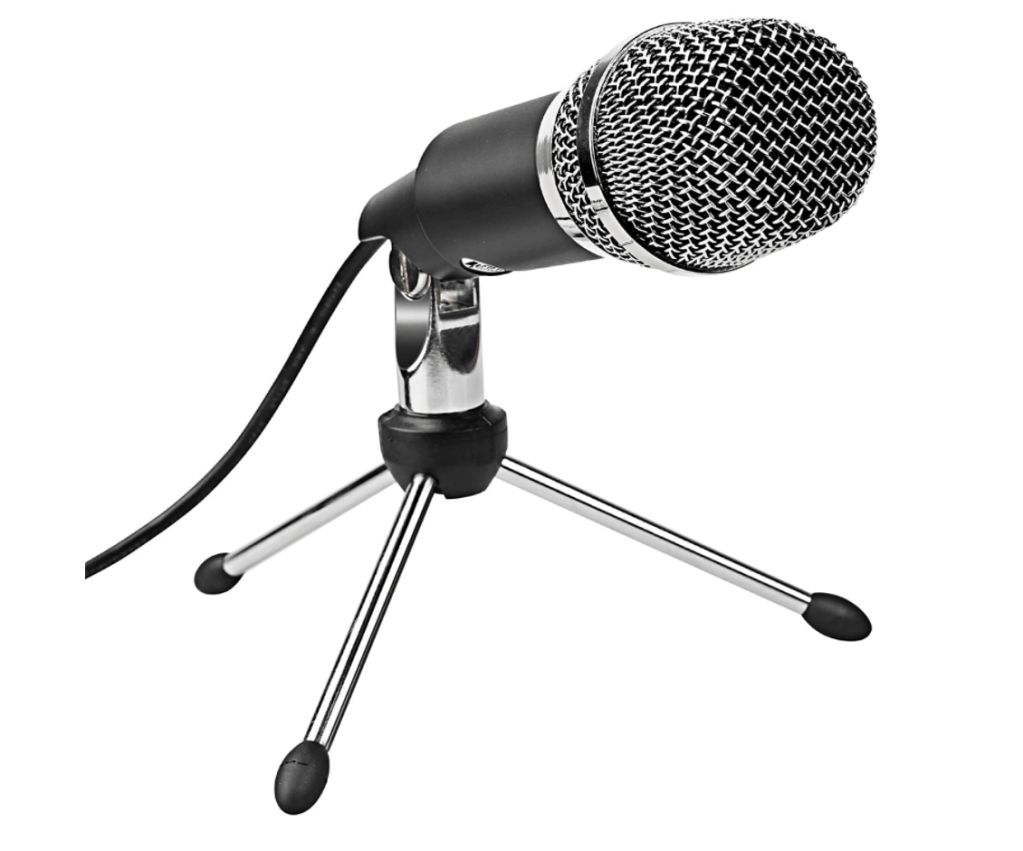
A decent webcam and high quality desktop mic is enough hardware to launch a $10k per month business. There are people out there doing it. (Not saying I’m one of them!)
Fifine Plug & Play Home Studio USB Condenser Mic
This is another area where you can go way high-scale, or you can go bargain. As usual, I’m shooting for something that delivers high quality audio at a price that works for someone just starting out.
This Fifine Plug & Play Home Studio USB Condenser Mic is a great choice for a high-quality desktop mic that looks great, sounds great, doesn’t take up much room, and doesn’t cost an arm and a leg. This is the mic I use for day-to-day audio recordings, video conference meetings, webinars and so forth.
Shop for the Fifine Plug & Play home Studio USB Condenser Mic here.
My Digital Marketing Toolkit
This is the hardware I use to run a boutique digital marketing agency. As far as hardware goes, this is more than enough to run a $10k per month business, as a solo-preneur. These are the actual tools that I use, so I’m happy to answer any questions you have before or after you buy any of them.
If you have other recommendations, feel free to drop them in the comments below! Let me know if you’ve had success leveraging these tools in your business.
Some links on this page are affiliate links, and the author may earn a portion of the sale price for products purchased.
 DeMaio Digital Marketing